
2. In the Beginning, there was Uxbridge
Clueless in (1970s) Toronto. I started this series of articles because I wanted to know more about Canada than just stories of General Brock and Thayendanegea (Joseph Brant).

Updated: January 20, 2024
General Brock and me
Growing up in Toronto in the 1960s and 70s, the only history I cared about was how the Toronto Maple Leafs hockey team did the previous night? My mother - bless her - had other plans though.
You see, she always talked about General Brock. My mother insisted we were related to him. I knew Upper Canada went to war with the Americans over something and that we won due to Brock’s bravery. She was proud of her “relative”.
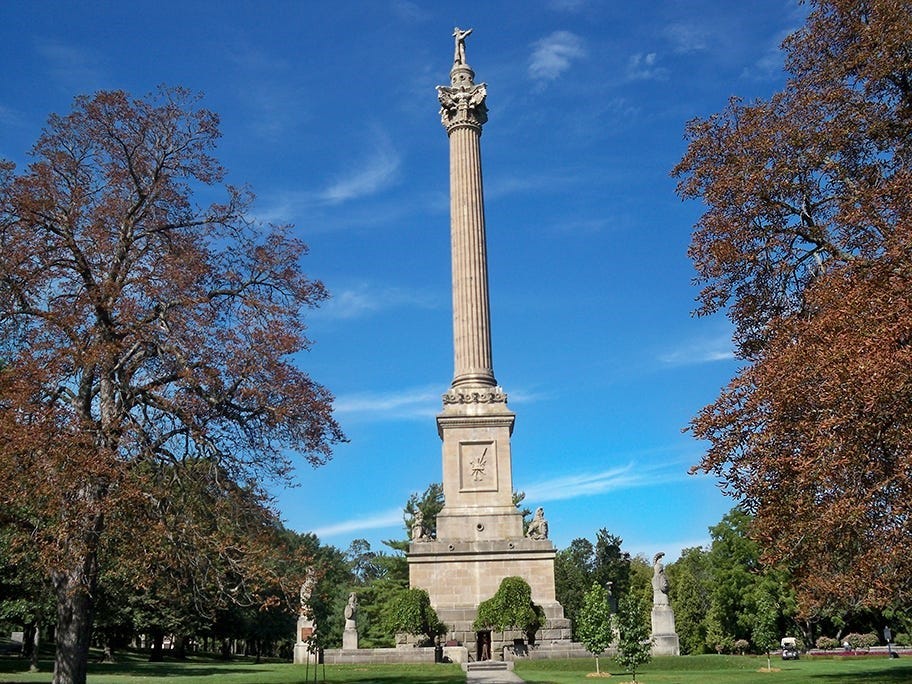
This story became part of my earliest memory of anything remotely resembling a history lesson. And it involved me and my family staring up at an enormous granite pillar planted like an alien rocket on the terminal end of the ancient Niagara Escarpment. General Isaac Brock did something cool and for his mighty coolness, Ontario graced him with a giant Phallus to remind the Americans ours was bigger than there’s. My mother insisted the great Isaac was related to us because her maiden name was Badger. Badger and Brock share a similar linguistic heritage in post Anglo-Saxon England, but I was skeptical, and nothing has changed my mind since then.
The real story
My first encounter with real history came with a large dose of childhood skepticism and wonder. My wonder zeroed in on why my mom was telling me this story when the food was getting warm in that hamper. Peanut butter and Jam sandwiches awaited me, and my mom was keeping me away from them!
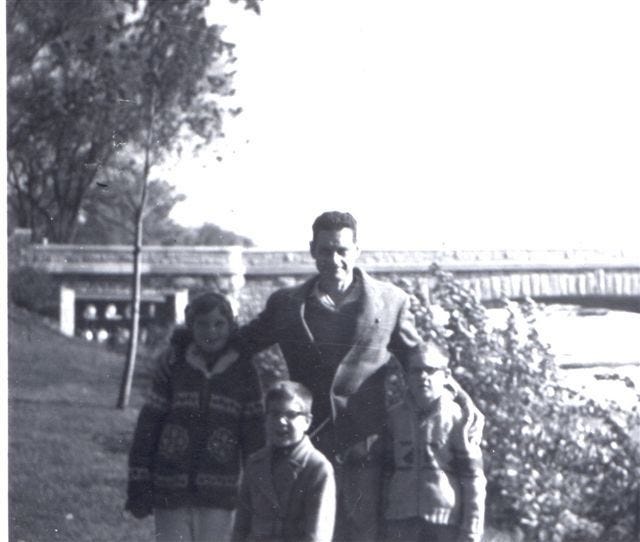
What else did I know? Well, I knew Ontario had always been the home of tribes of peoples we called Indians, but I did not know who they were. I had no idea the names these tribes gave themselves, let alone what the Europeans called them. It never once occurred to me that a long time ago people other than Europeans walked across the very land my parents owned. Perhaps they even set up camp for a night or two.
I was dumb as a doorknob about this. And completely not interested.
History existed on the very edges of my thinking. I knew more about Supertramp than about the extraordinary effort these tribes exerted to thrive and survive a pre-European contact existence.
I could blame my teachers at school for this dumb as a doorknob emptiness. I could shake my head and not a single hatchet or canoe would go flying across my brain to hit the other side. Nothing of historical significance existed in my brain except a big blank space.
For the love of history
Yet, for all this my mother did instill in me an interest in history but by accident. Let me explain.
The roots of this began in a little farming community northeast of Toronto called Uxbridge. It was, and still is, one of those towns in Ontario that is easy to forget. Its claim to fame has always been farms, trees, rivers and lately, a bedroom community for Torontonians. This small town was as anonymous as any forgotten village in the backcountry of Ontario could be. It was not even a stop along any major route north, yet it holds the roots of my place in life.
Ever since I can remember, as soon as the days were warm, my parents would drag our family into my dad’s car to begin our almost weekly drives up to my mom’s ancestral home in Uxbridge. My grandmother and grandfather had a “farm” that led off the main road just before Uxbridge proper. Times at my grandmother’s home were formative days for me. I learned to swim in the ever-cold little pond on the property; my brother and I went on errands to pick water-crescent from the slow-moving stream feeding the pond; I was enchanted by those spidery things walking across the slow moving waters of the stream just below my grandfather’s abandoned house; we eat ice cream with my grandmother under an awning of her trailer that was parked permanently on the front grass; and many more memories.
Nothing spoke to me about the joy of my childhood there than drinking fresh, cold water flowing directly from a pipe that discharged water from a spring deep below the town park. After a day swimming and picnicking at the big pond, I would run over to this pipe for ice-cold water. It made for fun times, especially if my brother were around so I could spray him with water.
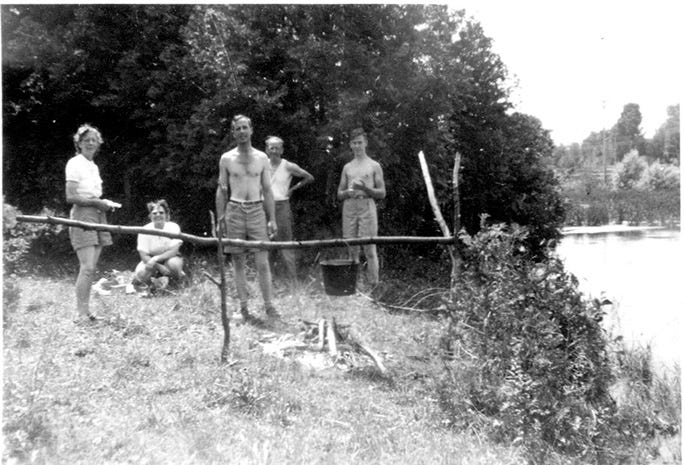
It was thinking about these memories years later that jolted me out of my dumb as a doorknob mentality. I got interested in learning more about my mother’s childhood in Uxbridge. And about Uxbridge.
All I knew was that my mother and her siblings were born in Uxbridge. I knew it was a village on the northern edge of the Oak Ridges Moraine. I also knew that Uxbridge was the place where my grandfather settled to avoid fighting in the great war of Europe. Farmers were exempt from military duty and Uxbridge seemed an ideal place to become a faux farmer. Of course, his “farm” consisted of a small plot of land next to a pond and a little creek that powered a mill downstream.
“Were tha born in a barn?”
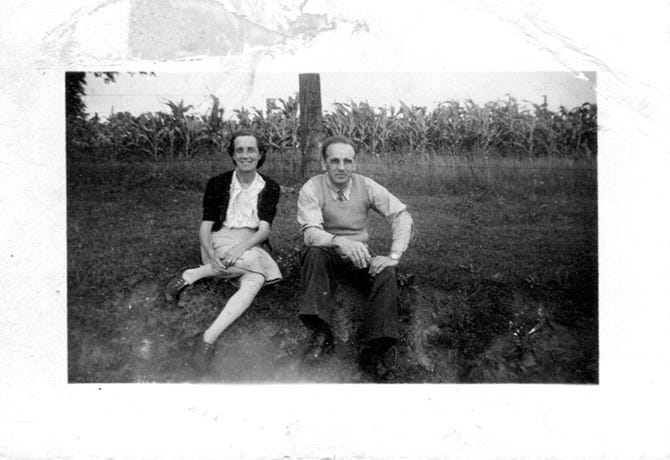
This was 1916. Something about his Yorkshire roots meant he knew excellent value when he saw it. He chose his land carefully. Despite a small plot of land, his property lay to the north of the lands of a famous family - the Goulds (you can see the Gould farm behind the fence in the photo below). This name will become particularly important to this story, but more on that later. Their grandson would become one of the world’s most famous pianists performing the gold standard of one of Bach’s concertos - the Brandenburg Concertos. You might know him - Glenn Gould.
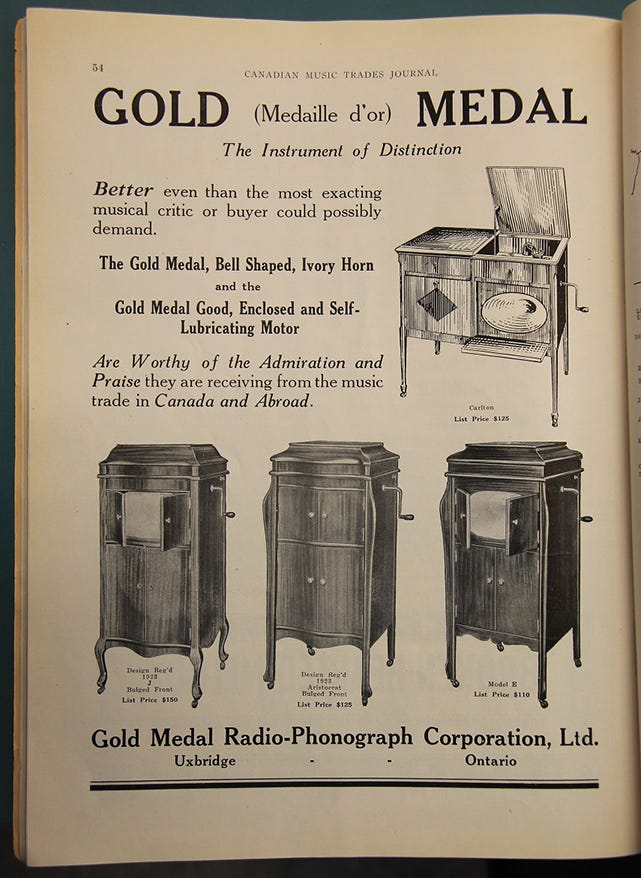
But this town also boasted two or three furniture factories and that fit well with my grandfather’s profession. He worked with wood. Fine wood. His Cabinetmaking skills came from training in Yorkshire and Manchester. He quickly landed a job building radio cabinets for Gold Medal Radio-Phonograph Company. He was a good breadwinner, even during the Great Depression.
I learned there’s oral and written history
I learned much more about my mom’s family in Uxbridge, but this is a story about the great awakening I experienced in history. We can leave behind my grandparents’ home in Uxbridge for now.
Every day my parents told me little snippets of history, which I learned later is called Oral History. Children usually let their eyes glaze over during such outbursts of historiography, but images of these stories stick in their little minds. My mother was proud of her childhood and her experiences as a child. I did not know it then but stories such as these became the keys to understanding who we are. It puts us in context. It is why cultures have collective stories that are often true but just as often myths. These shared stories form the glue that binds a culture together. For example, I took what my mother said about General Brock on face value and with a good dosage of skepticism, but it gave me something bigger to identify with. On the other hand, I could not doubt the truth about my mother’s childhood in Uxbridge. This oral history became the touchstone of who I am, or at least part of who I am.
Witnesses to the stories my mother told verified what she said. The oral history of her childhood was true because her siblings told the same stories. Other sources would verify the reason my grandfather moved up to Uxbridge during World War One. I took notice of these stories. Through other sources, these stories moved from oral history to documented facts. But that meant research and hard slogging to get my aunts and uncle to share their experiences. These questions were far from annoying to them. They enjoyed sharing these stories. They were happy someone was interested in listening to their stories.
As much as I wanted to learn more about my mom’s family in Uxbridge, it led me to ask deeper questions. For example, how was life in that little village when my grandfather first moved there? What about the time between the wars and the great depression? And what brought the founders of the town - the Goulds - to the Uxbridge area in the first place? As the Gould name is everywhere in the town, I wanted to know who they were and where they came from.
In the beginning there was…Uxbridge
You might ask why I wanted to know all this. The founding of Uxbridge is but one small part of an important broader story - the story of the founding of Canada. No doubt Canada is a unique historical experiment. The influences, the dynamics, the type of people and the events of Upper Canada were fundamental to the creation of the nation of Canada.
But to fully understand this I needed to go back in time, further back, way back. I needed to go back to when the first inkling of being a Canadian began and the events that led to this sense of identity.
I began by reading about Uxbridge and then I moved back in time to the 1840s and 50s when the first settlers arrived in what was to become Uxbridge. After exhausting available books on this topic, I broadening my reading to look at the major events of early nineteen century Upper Canada such as the Upper Canada Rebellion (the Goulds had a small part in that), the distribution of land to settlers, the establishment of farmsteads and villages and the spread of settlement from the border with Lower Canada border west to the Niagara region and the Western Peninsula.
The War of 1812
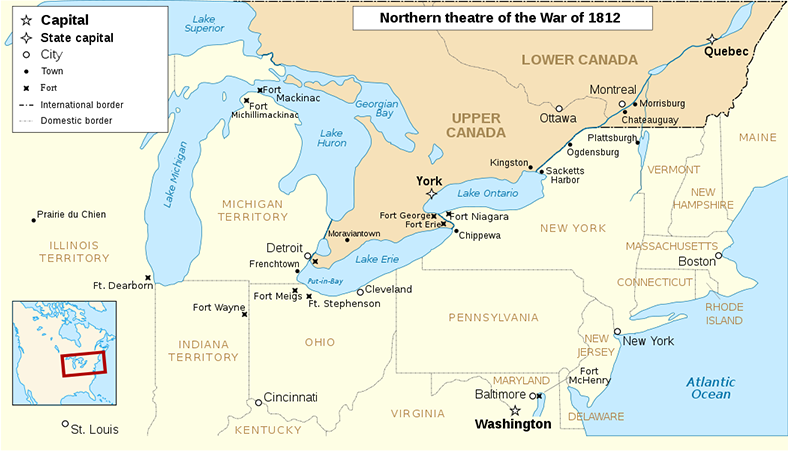
Once completed, I went further back in time. I learned about the war of survival called the War of 1812 which nearly ended the existence of Upper Canada. I asked myself why the Americans went to war against the British again. The British oversaw Upper Canada, but the British did not fight alone. The US Army were in fact attacking Americans who had settled in Upper Canada. They were fighting against their own people. More significantly, they were also fighting against the tribes who knew what the Americans were doing to their lands south of the border.
The American Loyalists
This led naturally to reading about the Americans who emigrated to Upper Canada from a hostile United States after 1776. These Loyalists, as they were known, became amongst the first settlers who carved out little farms for themselves and began to build communities up and down the northern and western end of Lake Ontario.
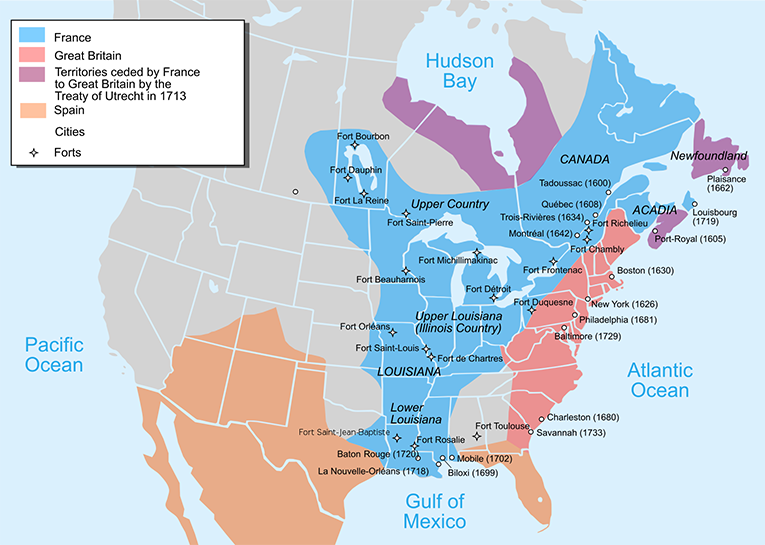
But these Loyalists were not entering uninhabited land. The British won control over this territory as victors over the French during the Seven Years War (1756 to 1763). The French held these lands at the mercy and cooperation of the powerful tribes who allied with them against the British of the American colonies.
The Origins of Canada
A century of French presence in this territory ended abruptly in the 1763 Treaty of Paris but it was the French who first encountered the Hurons and other tribes who inhabited these territories.
I began asking questions about the First Nations peoples. How did they live; what was their diet; what skillset did they bring to mastering migrations across vast areas in search of new lands and animals; what technology did they possess to build their famous canoes, communal homes, and weapons of war? These and more questions kept coming like a flood and so did the online book ordering.
I am still beginninging….
At the end of the day, I still consider myself a beginner when it comes to the history of Upper Canada. But I now know enough to say something intelligent about it. In this ongoing series of articles, I write about what I have researched and studied. Researching comes naturally to me as I have a history degree from the University of Waterloo in the heart of Upper Canada (Ontario) and have spent over 30 years as a technical writer researching diverse topics for documentation. I do know how to get at the truth.
However, I need to start somewhere and the best place to start is, as always, at the beginning.
These beginnings are - oddly - the end of my quest that began with this journey of discovery. We are who we are because of our collective memory. Our shared stories define us, both our oral history and written history. When my parents shared stories with me, they helped me define myself. If I had ignored them as only giving me irrelevant kitchen table chit chat, stuff old people talk about, I would be the poorer for it.
I did not and I am the richer for it.
Glenn J. Lea, Canadian historian