
32. How to establish a successful settlement - Champlain learns how while in the Louvre
Samuel de Champlain spent the years 1601 to 1603 in Paris as a guest of King Henri IV. He learns cartography and becomes "geographer royal" to the King.

In August 1600 when Champlain returned to Spain from his overseas voyage to the Spanish West Indies and New Spain his mind was full of the images of what he saw and witnessed. Physically, he showed the effects of the long voyages and frequent overland excursions. He sported a sunburnt face, a long beard and a robust frame. But his head was full of mixed emotions - some good and some very disturbing. Despite all this, he was glad to have made the journey.
He achieved a personal goal to see for himself what the Spanish were preventing others to see. As soon as he could he put feather to paper and began to write a report called “A Brief Discourse” which he described what he had seen and how Spain made so much vast wealth from these lands. He also included drawings he had made during his travels.
Champlain inherits his uncle Allène’s estate
By the time he returned to Cadiz in Spain as soon as he could he went to see his uncle, Captain Guillaume Allène. The captain was not the same man that sent him off three years previously. Despite the brief time, Allène could no longer take care of himself. It is uncertain if Champlain’s aunt was still alive to nurse him. He was extremely sick and would have less than a year to live.
At his uncle’s request, Champlain immediately set about organizing the captain’s papers and getting his estate in order. In less than a year, by June 1601 Captain Allène was dead. In his will the captain gave to Champlain a substantial estate near La Rochelle in Saintonge, France as well as commercial properties in Spain. Also, more of an annoyance than an inheritance, Champlain was now the owner of a 150-ton ship tied up at the dock in the village of San Sebastian in northeastern Spain. No mention was made of the San Julian, the ship owned by the captain used by Champlain on his voyages, but Spain owed a substantial sum for the use of the ship.
Captain Allène bequeathed all these properties to Champlain not out of convenience but because he was very fond of his nephew. He had complete trust in him because Champlain demonstrated good judgement and loyalty. And besides all that, the captain was fond of the Champlain family into which he married through his wife, the sister of Samuel’s mother.
However, this inheritance turned into an accounting nightmare for Champlain. He was required to meet with the stakeholders to settle any claims and to finish any outstanding commercial arrangements. What Champlain did with San Julian and the Captain’s other ship is not known but he disposed of them as he had no need of them.
After completing this accounting business, he focused on finishing his report of his travels across the Atlantic. He described the peoples, wildlife, crops and fruits he found there, but he also warned that Spain had almost full control of the Spanish West Indies and New Spain. He believed any opportunities for France in these territories would come through war. The key islands of Puerto Rico, San Domingo, Cuba and the Spanish Main (Mexico and south) were fully Spanish. France could pick off smaller island chains, but any larger islands could only be taken by the edge of a sword.
Champlain moves to Paris at the request of King Henri IV
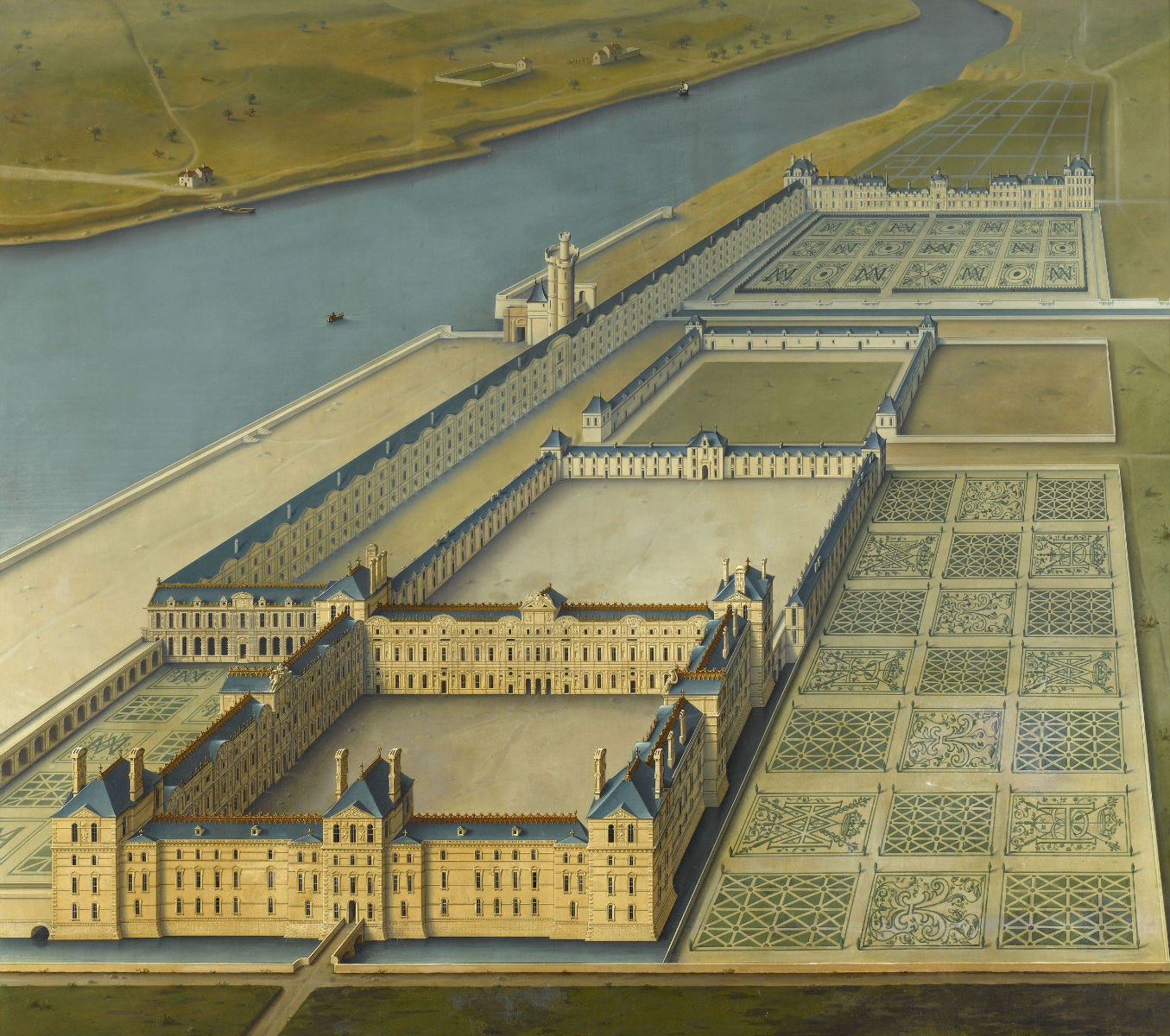
This brief report landed not as a thud on King Henri IV’s desk but as a long-awaited letter from a dear friend. The King was grateful for Champlain’s courage and loyalty to France, so much so that the King granted him a lifelong pension and ordered him to remain at court. This meant Samuel de Champlain’s new address was the Louvre in Paris. It also means he was now financially independent.
With his newfound opportunity, he did not waste his days living amongst the courtiers of the Louvre. Rather, he busied himself by absorbing the knowledge and expertise of the scientists and cartographers whom King Henri had brought to Paris. With his evident ability at drawing, Champlain eagerly absorbed the art of cartography and became an excellent geographer and mapmaker.
It seems quite fitting that the founder of Canada’s first European settlement would be a mapmaker not a conquering soldier. When he eventually made his journeys to what would become New France, Champlain would use his newly developed skills to accurately map out its coastlines and topography. He would use his experiences in the West Indies to locate defensible ports for French vessels that were also capable of sustaining a growing population.
Although he first established settlements in what is now Nova Scotia, it would be the town of Quebec that demonstrated Champlain’s knowledge of using geography as a defensive measure while ensuring a reliable food supply for its inhabitants.
When Champlain arrived at the Louvre, he had little inkling of what he would become. But history is a collection of unremarkable events and small decisions would lead to momentous events. Such was the case for Champlain as he arrived in Paris in 1601.
This is the story of a series of unremarkable events that would lead to a decision to venture across the North Atlantic and found the first permanent French settlement in what would become Canada.
